

How to Find a Reliable Roofer in the UK: A Homeowner’s Checklist
How to find a trustworthy roofer in the UK: trade bodies, insurance, written quotes, warning signs of rogue traders and what to expect on the day.
How to find a trustworthy roofer in the UK: trade bodies, insurance, written quotes, warning signs of rogue traders and what to expect on the day.
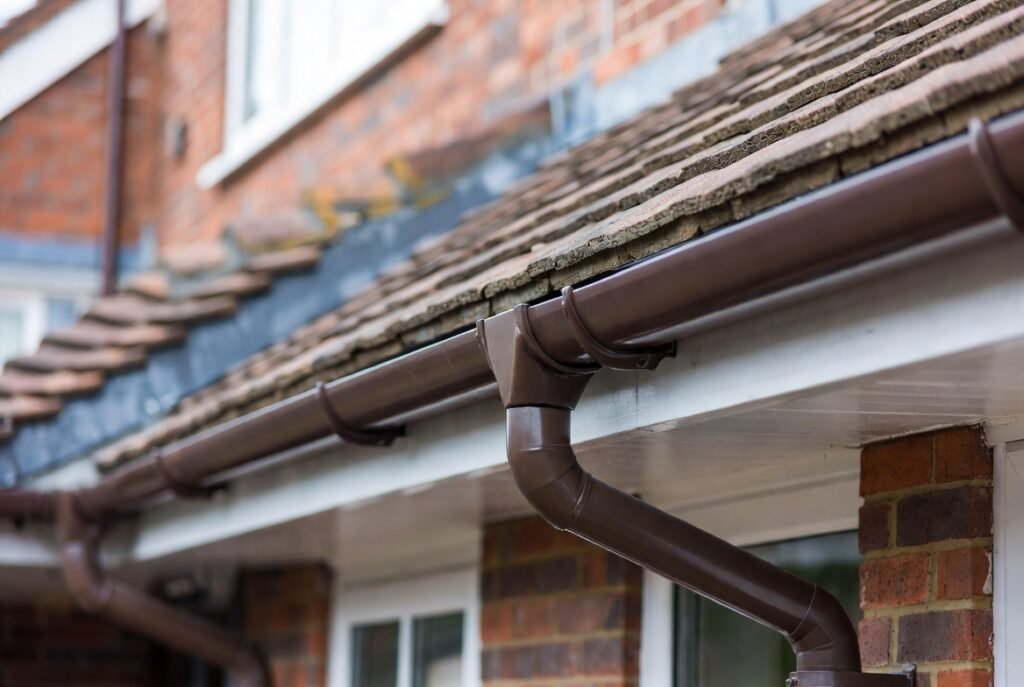
Fascias and soffits are easy to ignore until something goes wrong. Yet these boards protect the edge of your roof, support your gutters and help ventilate the loft. This guide explains what fascias and soffits do, how to tell if they need repairing or replacing, and what to consider when you upgrade. Quick answer: Repair fascias and soffits when damage is small and local, such as a short rotten section or peeling paint. Replace them when timber rot is widespread, gutters sag or pull away, or paint keeps failing. Many homeowners replace old timber with UPVC because it needs very little maintenance. What do fascias and soffits do? The fascia is the long board fixed along the ends of the rafters, at the edge of the roof. It carries the gutters and protects the rafter ends from the weather. The soffit sits underneath, closing the gap between the fascia and the wall. In addition, soffits often include vents that let air into the loft, which helps prevent condensation. Repair or replace fascias and soffits? Repair is usually enough when Replacement is usually better when There is a small patch of rot Rot is spread along the boards Paint is peeling but the timber is sound Paint keeps failing within a year or two A gutter bracket has worked loose Gutters sag or pull away along their length One board is damaged Several boards are cracked, warped or soft A roofer can cut out a small rotten section, fit new timber and then paint it. However, when the timber is soft along much of its length, patching rarely lasts. In that case, full replacement is the better value. Signs your fascias and soffits need replacing Soft, crumbling or dark-stained timber. Paint that flakes or peels soon after decorating. Gutters that sag, drip at the joints or pull away from the fascia. Gaps, holes or nests where birds or pests get in. Damp patches on the walls just below the roofline. How gutters and the roofline work together Gutters collect rainwater from the roof and carry it to the downpipes. Because they are fixed to the fascia, a weak fascia soon leads to sagging gutters. Likewise, blocked or leaking gutters can soak the fascia and soffit and cause rot. So it often makes sense to look at the whole roofline together. Signs your gutters need attention include overflowing in heavy rain, dripping joints, plants growing in them and staining on the walls below. Why many homeowners choose UPVC fascias and soffits UPVC does not rot and does not need painting. Usually, a wipe down now and then is enough to keep it clean. It also comes in a range of colours and finishes, including woodgrain effects. As a result, many homeowners replace old timber with UPVC when the time comes. There are two main ways to fit them. Full replacement removes the old boards so the roofer can check the rafter ends. Capping covers the old timber with UPVC. Capping can work over sound timber, but it can hide rot. So full replacement is usually the safer choice where the timber is in poor condition. Fascias and soffits, ventilation and nesting birds Replacing fascias and soffits is also a good time to check the loft ventilation. For example, vented soffits or over-fascia vents help reduce condensation in the roof space. Birds and bats often nest behind old roofline boards. The law, including the Wildlife and Countryside Act 1981, protects wild birds, their eggs and active nests, as well as bats and their roosts. Therefore, a responsible roofer will check for nests before starting and plan the work around them. Simple roofline maintenance tips Have the gutters cleared at least once a year, especially after autumn. Check the roofline from the ground after storms. Wipe UPVC boards with warm soapy water now and then. Fix small problems early, before water damages the timber behind. Fascias and soffits FAQs Is it worth replacing fascias and soffits? Yes, if the timber is rotten or the gutters are failing. New fascias and soffits protect the rafter ends and support the gutters properly. In addition, UPVC boards remove the need for regular painting. Can damaged fascias and soffits be repaired? Yes. A roofer can usually fix small, local damage by cutting out the bad section and fitting new timber. However, replacement is the better answer for widespread rot. How long do UPVC fascias and soffits last? Good quality UPVC boards last for many years with very little maintenance. Their life also depends on the quality of the fitting and the condition of the timber behind them. Should gutters be replaced at the same time as fascias? Usually, yes. The gutters must come off to replace the fascia anyway, so it is often efficient to fit new ones at the same time. This is especially true if the old gutters leak or sag. About this guide This guide was written by the GNP Roofing team in Southall. We are working roofers, and we deal with gutters, fascias and soffits on homes across West London. So the advice here comes from what we see on real roofs, not from a sales script. It was last reviewed in October 2026. Get help from GNP Roofing Need new gutters, fascias and soffits, or just a repair? We can inspect your roofline and recommend the right option. GNP Roofing Building Ltd is based in Southall and covers 14 areas across West London. We have over 15 years of experience and carry full public liability insurance. In addition, every job comes with a 10-year written guarantee, and our own team does the work, so we never subcontract. See our roofing services in West London, check the areas we cover, or contact us for a free written quote. You can also call 07424 323113.

Chimneys take a battering from wind, rain and frost. Because they sit at the highest point of the roof, small faults can quickly turn into leaks or loose bricks. This guide explains the most common chimney repairs, the warning signs to look for and how urgent each problem is. Quick answer: The most common chimney repairs are repointing the mortar between the bricks, renewing the flaunching around the pots, replacing lead flashing where the stack meets the roof, and fitting cowls or caps. Damp on chimney breasts, crumbling mortar, loose pots and leaks around the stack are the main warning signs. Chimney repairs at a glance Repair What it fixes Typical warning signs Repointing Worn mortar joints in the brickwork Crumbling or missing mortar, damp on chimney breasts Flaunching The mortar bed around the chimney pots Cracked mortar at the top, loose or leaning pots Lead flashing The seal where the stack meets the roof Leaks around the chimney, lifted or split lead Cowls and caps Rain, birds and debris entering the flue Damp inside, nesting birds, poor draw Why chimneys need repairs A chimney stack is fully exposed to the weather. Over the years, frost breaks down mortar, wind loosens pots and rain finds gaps in the flashing. As a result, water can soak into the brickwork and appear as damp patches on chimney breasts or bedroom ceilings. Chimney repairs: repointing Repointing replaces worn mortar between the bricks. First, the roofer rakes out the old, loose mortar to a sound depth. Then they clean the joints, dampen the brickwork and pack in fresh mortar. Finally, the joints are finished neatly so that rainwater runs off. On older homes, the mortar should match the original. For example, many period chimneys were built with lime mortar. Using a hard cement mix on soft bricks can trap moisture and damage the brick faces. Chimney repairs: flaunching Flaunching is the sloped mortar bed at the very top of the stack. It holds the chimney pots in place and sheds rain away from them. When it cracks, water gets into the stack and the pots can work loose. To repair it, the roofer removes the old flaunching down to a firm base. Next, they re-bed or straighten the pots if needed. Then they lay a new, strong mortar bed shaped to slope away from the pots. Often, they add a waterproofing additive to the mix. Chimney repairs: lead flashing Lead flashing seals the joint where the chimney meets the roof tiles or slates. Over time, lead can split, lift in the wind or come away from the mortar joint. Because this joint takes a lot of water, failed flashing is one of the most common causes of leaks around chimneys. A good repair uses properly dressed lead, tucked and pointed into the brickwork. Cowls, caps and unused chimneys A cowl or cap keeps rain, birds and debris out of the flue. On a working fireplace, the cowl must suit the appliance, so take advice first. If a chimney is no longer used, it can be capped. However, it still needs some ventilation, otherwise damp can build up inside the flue. Also, if your home is listed or in a conservation area, check the rules before you remove a stack or change how it looks. The Planning Portal guidance on roofs is a good place to start. Signs you need chimney repairs Damp patches or stains on chimney breasts, walls or ceilings near the stack. Crumbling, cracked or missing mortar between the bricks. Cracked flaunching or chimney pots that lean or move. Lead flashing that is lifted, split or missing. Bits of brick or mortar in the gutters or on the ground. A stack that leans, which needs urgent attention. How urgent are chimney repairs? A leaning stack or loose pots are urgent, because they can fall in high winds. Leaks around the chimney should also be fixed quickly to protect timbers and ceilings. On the other hand, light wear on the mortar is less urgent. Even so, it is cheaper to repoint early than to rebuild later. Chimney repairs FAQs Do roofers do chimney repairs? Yes. Most roofers carry out chimney repairs such as repointing, flaunching, lead flashing and fitting cowls. For major rebuilds, a roofer will often work with a bricklayer. How much do chimney repairs cost? The cost depends mainly on access and the size of the job. For example, a chimney that needs scaffolding costs more than one that can be reached safely from the roof. So always ask for a written quote that lists the work and the access needed. How long does chimney repointing last? Good repointing with the right mortar can last for decades. However, exposed stacks on windy sites may need checking more often. Can a leaking chimney damage my home? Yes. Water can soak into brickwork, timbers and plaster, which causes damp, stains and rot. Therefore, it is best to fix chimney leaks as soon as you notice them. About this guide This guide was written by the GNP Roofing team in Southall. We are working roofers, and we deal with chimney stacks, flashing and roof leaks on homes across West London. So the advice here comes from what we see on real roofs, not from a sales script. It was last reviewed in October 2026. Get help from GNP Roofing Worried about your chimney? We carry out chimney repairs including repointing, flaunching, lead flashing and cowls. GNP Roofing Building Ltd is based in Southall and covers 14 areas across West London. We have over 15 years of experience and carry full public liability insurance. In addition, every job comes with a 10-year written guarantee, and our own team does the work, so we never subcontract. See our roofing services in West London, check the areas we cover, or contact us for a free written quote. You can also call 07424 323113.

A new roof is a big investment, so nobody wants to replace one too early. However, waiting too long can lead to leaks, damp and damaged timbers. This guide covers the 10 most common signs you need a new roof, typical UK roof lifespans and how to decide between a repair and a replacement. Quick answer: The main signs you need a new roof are a sagging roofline, daylight or damp in the loft, repeated leaks, widespread cracked or slipping tiles, crumbling ridge mortar and a roof near the end of its lifespan. One or two broken tiles can usually be repaired. Widespread problems usually mean replacement makes more sense. 10 signs you need a new roof 1. The roofline sags or dips Look at the roof from the street. If the ridge or the slopes dip or bow, the timbers or decking may be weak. This is one of the most serious signs, so get it checked quickly. 2. You can see daylight in the loft Go into the loft on a bright day with the light off. If you can see daylight through the roof, water can get in too. Also look for damp timbers, stained underlay or a musty smell. 3. Leaks keep coming back One leak can usually be repaired. However, when new leaks keep appearing in different places, the whole roof covering may be failing. 4. Many tiles or slates are cracked, slipping or missing A few damaged tiles are a simple repair. On the other hand, widespread damage often means the fixings or the tiles themselves have reached the end of their life. Slates that keep slipping are a common example, because the nails have rusted through. 5. Ridge and hip mortar is crumbling Mortar on ridge and hip tiles wears out over time. If it is cracked or falling out along the whole roof, it may be worth upgrading the roof. Many modern roofs use dry ridge systems instead of mortar. 6. The underlay has failed Underlay, or roofing felt, sits under the tiles as a second line of defence. Older bitumen felt can sag, tear or crumble. When it fails across the roof, replacement is usually the only lasting fix. 7. Debris or granules collect in your gutters Bits of tile, sand-like granules or chips of slate in the gutters show that the roof covering is breaking down. So check your gutters when they are cleaned. 8. Heavy moss and damp on the roof Light moss is common and not always a problem. However, thick moss holds water against the roof, lifts tiles and speeds up wear on porous surfaces. 9. Repair costs keep adding up If you are paying for repairs every year, compare the total with the cost of a new roof. A common rule of thumb is that when repairs approach a quarter to a third of the replacement cost, a new roof is usually better value. 10. The roof is near the end of its lifespan Age alone does not mean a roof has failed. Still, an old roof combined with any of the signs above usually points to replacement. How long does a roof last in the UK? Every roof is different, because weather, ventilation and installation quality all play a part. As a general guide, though, typical lifespans look like this: Roof type Typical lifespan Older felt flat roof Around 10 to 20 years Concrete tiles Around 30 to 50 years Clay tiles Often 60 years or more Natural slate Often 100 years or more, although fixings may fail sooner Signs you need a new roof vs signs you need a repair Many problems can be fixed with a repair. For example, a few broken tiles, one failed flashing or a single leak are usually repairable. In contrast, problems spread across the whole roof usually point to replacement. These include widespread slipping slates, failed underlay, sagging and repeat leaks. A good roofer will tell you honestly which applies to your roof. If someone pushes a full replacement without showing you the problems, get a second opinion. Do you need permission for a new roof? Re-roofing like for like usually does not need planning permission. However, changes to materials, height or shape might, especially in conservation areas. In addition, Building Regulations often apply when a large part of a roof is replaced, for example to upgrade insulation. The Planning Portal guidance on roofs explains the rules. Signs you need a new roof: FAQs What are the first signs you need a new roof? Early signs include damp patches in the loft, slipping tiles or slates, crumbling ridge mortar and debris in the gutters. If you spot these early, a repair may be enough. So it pays to check your roof every year. How often do roofs need to be replaced in the UK? It depends on the material. An older felt flat roof may last 10 to 20 years, while concrete tiles often last 30 to 50 years. Clay tiles and natural slate can last much longer. Can I just repair my roof instead of replacing it? Often, yes. Isolated damage is usually repairable. However, if problems are spread across the roof, repeated repairs can cost more over time than replacing it. How do I spot a dodgy roofer? Be wary of anyone who knocks on your door uninvited, pushes for an instant decision or asks for full payment upfront. Instead, ask for a written quote, proof of insurance and photos of any damage they claim to have found. About this guide This guide was written by the GNP Roofing team in Southall. We are working roofers, and we deal with roof inspections, repairs and full replacements on homes across West London. So the advice here comes from what we see on real roofs, not from a sales script. It was last reviewed in October 2026. Get help from GNP Roofing Spotted some of these signs you need a new roof? We will tell you honestly

If your flat roof is leaking or past its best, you will probably hear three names: EPDM, GRP and felt. So which one should you choose? This EPDM vs GRP guide, with felt included, explains how each system works, where it suits best and what to ask your roofer. Quick answer: Neither EPDM nor GRP is best for every roof. EPDM rubber suits larger, simple roofs and copes well with movement. GRP fibreglass suits smaller or complex roofs and areas with light foot traffic. Modern torch-on felt is a solid budget option. In every case, the quality of the installation matters most. EPDM vs GRP vs felt at a glance Feature EPDM (rubber) GRP (fibreglass) Torch-on felt What it is Single-ply synthetic rubber membrane Glass reinforced polyester resin and matting Layers of bitumen membrane bonded with heat Finish Plain black rubber Smooth, hard, can be colour-coated Mineral finish, usually grey or green Flexibility High, copes well with movement Rigid Moderate Best for Large, simple roofs Small or complex roofs, balconies Budget jobs and many standard roofs Installation Cold-applied, no naked flame Laid in dry weather, needs to cure Uses a torch, so needs trained installers Repairs Usually simple to patch Possible, but needs good colour and resin matching Usually simple to patch Manufacturers quote long service lives for both EPDM and GRP, often 20 years or more. In practice, however, lifespan depends on the product, the deck underneath and the skill of the installer. What is an EPDM flat roof? EPDM is a synthetic rubber membrane. On most homes, it goes on as a single sheet, so there are few or no joints for water to get through. It is also flexible, which means it copes well with heat and cold. As a result, it is a popular choice for garages, extensions and dormers with simple, rectangular shapes. On the other hand, EPDM has a plain rubber finish. It also needs careful detailing around edges, outlets and upstands. A good installer makes a big difference here. What is a GRP flat roof? GRP stands for glass reinforced plastic, often called fibreglass. The roofer lays resin and glass matting over a timber deck, and then adds a topcoat. Once cured, it forms a hard, seamless surface that handles light foot traffic well. For this reason, GRP is common on balconies and roofs with lots of corners. However, GRP must be laid in dry conditions. Because it is rigid, the deck must also be sound and properly prepared, or cracks can appear later. What about felt roofing? Older felt roofs gave felt a poor reputation, as many lasted only 10 to 20 years. Modern torch-on systems are much better, though. They use several layers of reinforced bitumen membrane, so they are tougher and longer lasting. Felt is often the most budget-friendly option, and it is easy to repair. Still, it needs a trained installer because of the open flame. EPDM vs GRP: pros and cons EPDM pros and cons Pro: flexible, so it handles temperature changes and small movements. Pro: fast, flame-free installation in a single sheet on most homes. Con: plain rubber look that some people do not like. Con: edges and details must be done carefully to avoid leaks. GRP pros and cons Pro: seamless, hard surface that suits balconies and foot traffic. Pro: neat finish that can be colour-coated. Con: needs dry weather and time to cure. Con: rigid, so poor deck preparation can lead to cracking. EPDM vs GRP: which is right for your roof? Start with the roof itself. For example, a large, plain garage roof often suits EPDM. A small balcony or a roof with lots of corners may suit GRP better. Felt can be a good value choice for many standard roofs. Also think about looks, budget and whether you will walk on the roof. Most importantly, ask your roofer about the deck, insulation and drainage, not just the top layer. Many flat roof failures come from rotten decking or water pooling, rather than from the membrane itself. Do you need planning permission for a new flat roof? Replacing a flat roof covering like for like usually does not need planning permission. However, changes to the height, shape or use of the roof might. Building Regulations can also apply, especially if a large part of the roof is replaced and insulation must be upgraded. The Planning Portal guidance on roofs is a good place to check before work starts. EPDM vs GRP FAQs Is GRP better than EPDM? Not always. GRP is better for balconies, complex shapes and roofs with foot traffic. EPDM is often better for larger, simple roofs that move with the seasons. So the right choice depends on your roof, not on the material alone. What are the disadvantages of an EPDM roof? The main downsides are the plain rubber look and the need for careful detailing at edges and outlets. Also, sharp objects or heavy foot traffic can puncture it. Fortunately, small punctures are usually simple to patch. What is the best material for a flat roof in the UK? EPDM, GRP and modern torch-on felt can all perform well in UK weather. In fact, the installer’s skill, the condition of the deck and good drainage matter more than the brand name. Can you put EPDM or GRP over an old felt roof? Sometimes, but it is rarely the best idea. Overlaying can hide wet or rotten decking, which then fails later. So most roofers strip the old covering first and check the deck. About this guide This guide was written by the GNP Roofing team in Southall. We are working roofers, and we deal with flat roof repairs and replacements on homes across West London. So the advice here comes from what we see on real roofs, not from a sales script. It was last reviewed in October 2026. Get help from GNP Roofing Not sure whether EPDM, GRP or felt suits your roof? We can inspect it and

Water coming through the ceiling is one of the most stressful things that can happen at home. However, a roof leak emergency is easier to handle when you know the right order of steps. This guide explains how to tell if a leak is urgent, what to do in the first hour, what to avoid, and what a roofer does when they arrive. Quick answer: A roof leak emergency is when water is pouring in, a ceiling is sagging, or water is near electrics. First, keep people away from the area and switch off the power if water reaches wiring. Then catch the water, move valuables, take photos for your insurer and call a roofer. Never climb onto the roof yourself. Key points Safety comes first: stay out from under sagging ceilings and keep water away from electrics. Catch the water and protect belongings, then record the damage with photos. Do not go on the roof, and do not rely on sealant applied to wet surfaces. A roofer will make the roof watertight first, and then plan the permanent repair. Is a roof leak an emergency? Not every drip needs a roofer at midnight. So it helps to sort the urgent leaks from the ones that can wait until morning. Treat it as an emergency if It can usually wait until morning if Water is pouring in and buckets cannot keep up A slow drip is easily caught in a bucket The ceiling is bulging, sagging or cracking There is a damp patch but no active dripping Water is near lights, sockets or the fuse box The leak stopped when the rain stopped Storm damage has left part of the roof open Only a small stain has appeared on the ceiling Even a slow leak needs fixing soon, though. Water that soaks into timbers, insulation and plaster causes rot and mould over time. As a result, a small leak left for weeks often costs far more than a quick repair. Roof leak emergency: what to do in the first hour 1. Make the area safe First, keep people and pets out of any room with a bulging or sagging ceiling, because wet plasterboard can collapse. Next, if water is near light fittings or sockets, switch off the power at the consumer unit if you can do so safely. Never touch switches with wet hands. 2. Catch and control the water Put buckets, bowls or towels under the drip. If a bulge has formed, a small hole made carefully with a screwdriver lets the water drain into a bucket in a controlled way. This often stops the water spreading across the whole ceiling. Then move furniture, electronics and valuables out of the way. 3. Check the loft if it is safe If you can get into the loft safely, take a torch and look for the wet patch. Sometimes you can place a bucket or a plastic sheet under the leak from above. Also note where the water seems to come in, for example near a chimney, a valley or a roof window. This helps the roofer find the cause quickly. 4. Take photos for your insurer Photograph the ceiling, the wet patches and any damaged belongings. If you can see damage from the ground, such as missing tiles, photograph that too. Many home insurance policies cover sudden storm damage, although most exclude general wear and tear. So check your policy and keep a record from the start. 5. Call a roofer Finally, call a roofer who offers emergency call-outs. Describe what you can see, where the water is coming in and how fast. That way, they can bring the right materials for a temporary or permanent fix. What not to do in a roof leak emergency Never go up on the roof yourself, especially in wind, rain or the dark. Wet tiles and slates are slippery, and a fall from a roof can be fatal. In addition, avoid sealant or tape on wet surfaces, because it rarely holds. It can also make the real repair harder. Likewise, do not try to seal the leak from inside the loft, as water simply finds another route. Common causes of a sudden roof leak Most leaks have one of a few causes. For example, high winds can lift or break tiles and slates. Lead flashing around chimneys and walls can tear or lift. Blocked gutters and valleys can overflow and push water under the roof covering. Flat roofs can also split, especially where water has been pooling. To be ready, keep an eye on Met Office weather warnings and check your roof from the ground after storms. What happens when an emergency roofer arrives First, the roofer inspects the roof and finds the source of the leak. Then they make it watertight. In good conditions, that may be a permanent repair on the spot. In bad weather, however, it is often a temporary cover such as a tarpaulin or a membrane. Once conditions allow, they carry out the full repair and explain what went wrong. You should also get a written quote before any larger work starts. How much does an emergency roof repair cost? The cost depends on the cause, the roof type, access and the time of the call-out. For example, refixing a few slipped tiles costs far less than replacing a section of flat roof. As a rough guide, Checkatrade’s London listings for roof leak repairs showed a range of about £483 to £1,606 when we checked in October 2026. Because every roof is different, always ask for a clear written price before the main repair goes ahead. Roof leak emergency FAQs Should I call a roofer at night for a roof leak emergency? Yes, if water is pouring in, a ceiling is sagging or water is near electrics. A roofer can usually make things safe and protect the room. For a slow drip that a bucket can handle, calling first thing in the morning is normally fine. Can

Common roof problems on Acton (W3) homes, the warning signs to look for, what to do in an emergency, and when a repair is enough.
One of the most common questions we get is simply: how much will this cost? Prices vary by job, but here’s a general guide based on typical West London repair work. This guide explains the typical roof repair cost in West London, what pushes the price up or down, and how to get an accurate figure for your own home. Prices can also vary between areas because of access, parking and the age of the housing. For local details, see our pages on roof repairs in Southall, Ealing, Hounslow and Hayes. Job type Typical price range Minor tile/pointing repair £150 – £350 Flat roof leak repair £250 – £600 Valley or flashing repair £300 – £700 Full re-roof (average semi) £4,000 – £9,000+ Emergency callout & temporary weatherproofing From £150 What affects roof repair cost in West London? Roof access (terraced house on a narrow street vs. detached with driveway access) Roof pitch and height Material — slate and clay tile cost more to source and match than concrete tile Extent of underlying timber or structural damage found once work starts How to get an accurate roof repair quote First, ask for an inspection rather than a price over the phone. A roofer needs to see the damage, the access and the materials before giving a fair figure. Next, ask for the quote in writing, with materials and labour listed separately. Finally, check what guarantee comes with the work, and whether it is in writing. Should you repair now or wait? Small problems rarely stay small. For example, one slipped tile can let water soak the felt and battens underneath. As a result, a cheap repair today can become a much bigger job after a wet winter. So it usually pays to fix leaks and loose tiles as soon as you spot them. Also, if your home is listed or in a conservation area, check the Planning Portal guidance on roof work before any major changes. Our approach to roof repair cost We always provide a free, written, itemised quote before any work begins, so there are no surprise costs. In addition, every job comes with a 10-year written guarantee. For local advice, read our guides for Wembley and Uxbridge, or call +44 7424 323113 for a quote. How to get an accurate roof repair quote First, ask for an inspection rather than a price over the phone. A roofer needs to see the damage, the access and the materials before giving a fair figure. Next, ask for the quote in writing, with materials and labour listed separately. Finally, check what guarantee comes with the work, and whether it is in writing. Should you repair now or wait? Small problems rarely stay small. For example, one slipped tile can let water soak the felt and battens underneath. As a result, a cheap repair today can become a much bigger job after a wet winter. So it usually pays to fix leaks and loose tiles as soon as you spot them. Also, if your home is listed or in a conservation area, check the Planning Portal guidance on roof work before any major changes. Our approach to roof repair cost We always provide a free, written, itemised quote before any work begins, so there are no surprise costs. In addition, every job comes with a 10-year written guarantee. For local advice, read our guides for Wembley and Uxbridge, or call +44 7424 323113 for a quote.

Many West London homes have both a pitched roof and a flat roof section. This is common on Victorian terraces and semis with rear extensions. The two types fail in different ways, so flat roof maintenance is not the same as pitched roof care. Pitched roofs (tile, slate) Pitched roofs shed water quickly. So their main enemies are individual failures, such as slipped or cracked tiles. Worn pointing on ridge tiles is another common issue. Damaged lead flashing around chimneys and valleys also lets water in. Usually, a yearly visual check after winter is enough to catch problems early. Flat roof maintenance (GRP, EPDM, felt) Flat roofs rely on one continuous waterproof layer rather than overlapping tiles. As a result, a single puncture, split seam or pool of water can let rain in. GRP fibreglass and EPDM rubber last longer than traditional felt. Even so, every flat roof benefits from clearing debris and checking for standing water at least twice a year. Which lasts longer? A well-maintained slate or tile pitched roof can last 50 years or more. By contrast, GRP and EPDM flat roofs typically last 20 to 30 years. Older felt systems often need attention within 10 to 15 years. Simple flat roof maintenance and pitched roof checks First, walk around the house after a storm and look for slipped tiles, lifted flashing or debris on flat sections. Next, clear gutters, valleys and flat roof outlets every autumn. In addition, check ceilings under both roof types for new stains. Finally, book an inspection if you spot anything unusual, because small faults cost less to fix early. Planning a new flat roof? If you plan to replace a flat roof or change a roof shape, check whether you need permission first. For example, the Planning Portal guidance on roof work explains when planning rules apply. After that, a roofer can advise on the best system for your home. Not sure which roof type you have, or whether it needs attention? We inspect both across West London. For local advice, read our guides for Hanwell, Hayes and Brentford. Then call +44 7424 323113 for a free assessment.
West London roofs take a real beating from autumn and winter storms — driving rain, high winds, and the freeze-thaw cycles that crack older ridge tiles. If you’ve just been through a storm, use this storm damage checklist before calling anyone out. Why use a storm damage checklist? After a storm, it is easy to miss small problems. However, a missing tile or lifted flashing can let water in for weeks before you notice a stain. A simple storm damage checklist helps you spot these issues early. It also gives you clear notes and photos if you need to make an insurance claim. Storm damage checklist: from the ground Tiles or slates lying in the garden or on the pavement Visible gaps or dark patches in the roofline where tiles have slipped Sagging or bulging in flat roof sections Damaged or detached guttering and downpipes Debris (branches, fence panels) that may have struck the roof Storm damage checklist: inside the house Damp patches or discolouration on ceilings, especially in upper rooms Water stains around chimney breasts A musty smell in loft spaces Daylight visible through the roof felt in the loft What to do next If you can see active water ingress, place a bucket underneath and avoid using electrics nearby. Don’t go onto the roof yourself — storm-damaged tiles and wet surfaces are dangerous. Take photos from the ground for insurance purposes, then get a professional inspection. Before the next storm Prevention is cheaper than repair. So clear gutters and valleys each autumn, and fix any loose tiles before winter. Also trim branches that overhang the roof. In addition, keep an eye on Met Office weather warnings, so you can secure loose items in the garden before high winds arrive. Get help with storm damage GNP Roofing Building Ltd provides same-day emergency response across West London. For local advice, read our Acton roof guide or our Ealing storm damage guide. Then call +44 7424 323113 for urgent storm damage.