
Chimneys take a battering from wind, rain and frost. Because they sit at the highest point of the roof, small faults can quickly turn into leaks or loose bricks. This guide explains the most common chimney repairs, the warning signs to look for and how urgent each problem is.
Quick answer: The most common chimney repairs are repointing the mortar between the bricks, renewing the flaunching around the pots, replacing lead flashing where the stack meets the roof, and fitting cowls or caps. Damp on chimney breasts, crumbling mortar, loose pots and leaks around the stack are the main warning signs.
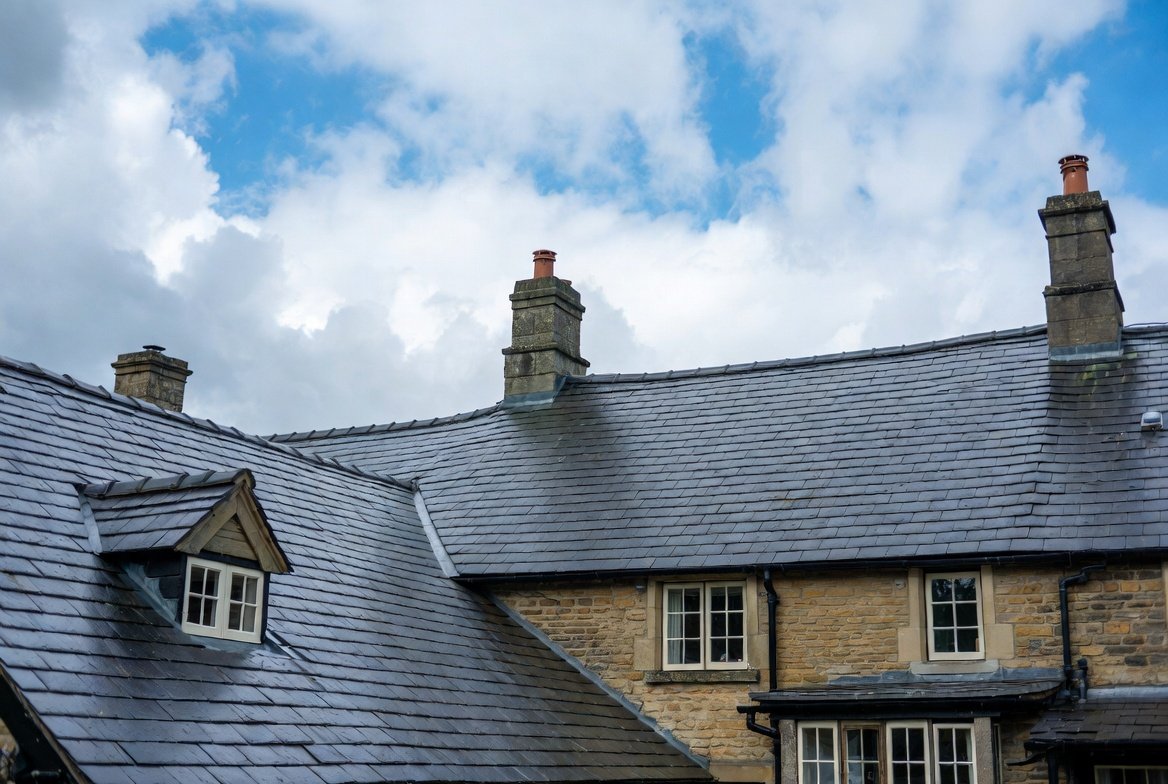
Chimney repairs at a glance
| Repair | What it fixes | Typical warning signs |
|---|---|---|
| Repointing | Worn mortar joints in the brickwork | Crumbling or missing mortar, damp on chimney breasts |
| Flaunching | The mortar bed around the chimney pots | Cracked mortar at the top, loose or leaning pots |
| Lead flashing | The seal where the stack meets the roof | Leaks around the chimney, lifted or split lead |
| Cowls and caps | Rain, birds and debris entering the flue | Damp inside, nesting birds, poor draw |
Why chimneys need repairs
A chimney stack is fully exposed to the weather. Over the years, frost breaks down mortar, wind loosens pots and rain finds gaps in the flashing. As a result, water can soak into the brickwork and appear as damp patches on chimney breasts or bedroom ceilings.
Chimney repairs: repointing
Repointing replaces worn mortar between the bricks. First, the roofer rakes out the old, loose mortar to a sound depth. Then they clean the joints, dampen the brickwork and pack in fresh mortar. Finally, the joints are finished neatly so that rainwater runs off.
On older homes, the mortar should match the original. For example, many period chimneys were built with lime mortar. Using a hard cement mix on soft bricks can trap moisture and damage the brick faces.
Chimney repairs: flaunching
Flaunching is the sloped mortar bed at the very top of the stack. It holds the chimney pots in place and sheds rain away from them. When it cracks, water gets into the stack and the pots can work loose.
To repair it, the roofer removes the old flaunching down to a firm base. Next, they re-bed or straighten the pots if needed. Then they lay a new, strong mortar bed shaped to slope away from the pots. Often, they add a waterproofing additive to the mix.
Chimney repairs: lead flashing
Lead flashing seals the joint where the chimney meets the roof tiles or slates. Over time, lead can split, lift in the wind or come away from the mortar joint. Because this joint takes a lot of water, failed flashing is one of the most common causes of leaks around chimneys. A good repair uses properly dressed lead, tucked and pointed into the brickwork.
Cowls, caps and unused chimneys
A cowl or cap keeps rain, birds and debris out of the flue. On a working fireplace, the cowl must suit the appliance, so take advice first. If a chimney is no longer used, it can be capped. However, it still needs some ventilation, otherwise damp can build up inside the flue.
Also, if your home is listed or in a conservation area, check the rules before you remove a stack or change how it looks. The Planning Portal guidance on roofs is a good place to start.
Signs you need chimney repairs
- Damp patches or stains on chimney breasts, walls or ceilings near the stack.
- Crumbling, cracked or missing mortar between the bricks.
- Cracked flaunching or chimney pots that lean or move.
- Lead flashing that is lifted, split or missing.
- Bits of brick or mortar in the gutters or on the ground.
- A stack that leans, which needs urgent attention.
How urgent are chimney repairs?
A leaning stack or loose pots are urgent, because they can fall in high winds. Leaks around the chimney should also be fixed quickly to protect timbers and ceilings. On the other hand, light wear on the mortar is less urgent. Even so, it is cheaper to repoint early than to rebuild later.
Chimney repairs FAQs
Do roofers do chimney repairs?
Yes. Most roofers carry out chimney repairs such as repointing, flaunching, lead flashing and fitting cowls. For major rebuilds, a roofer will often work with a bricklayer.
How much do chimney repairs cost?
The cost depends mainly on access and the size of the job. For example, a chimney that needs scaffolding costs more than one that can be reached safely from the roof. So always ask for a written quote that lists the work and the access needed.
How long does chimney repointing last?
Good repointing with the right mortar can last for decades. However, exposed stacks on windy sites may need checking more often.
Can a leaking chimney damage my home?
Yes. Water can soak into brickwork, timbers and plaster, which causes damp, stains and rot. Therefore, it is best to fix chimney leaks as soon as you notice them.
About this guide
This guide was written by the GNP Roofing team in Southall. We are working roofers, and we deal with chimney stacks, flashing and roof leaks on homes across West London. So the advice here comes from what we see on real roofs, not from a sales script. It was last reviewed in October 2026.
Get help from GNP Roofing
Worried about your chimney? We carry out chimney repairs including repointing, flaunching, lead flashing and cowls. GNP Roofing Building Ltd is based in Southall and covers 14 areas across West London. We have over 15 years of experience and carry full public liability insurance. In addition, every job comes with a 10-year written guarantee, and our own team does the work, so we never subcontract.
See our roofing services in West London, check the areas we cover, or contact us for a free written quote. You can also call 07424 323113.