
If your flat roof is leaking or past its best, you will probably hear three names: EPDM, GRP and felt. So which one should you choose? This EPDM vs GRP guide, with felt included, explains how each system works, where it suits best and what to ask your roofer.
Quick answer: Neither EPDM nor GRP is best for every roof. EPDM rubber suits larger, simple roofs and copes well with movement. GRP fibreglass suits smaller or complex roofs and areas with light foot traffic. Modern torch-on felt is a solid budget option. In every case, the quality of the installation matters most.
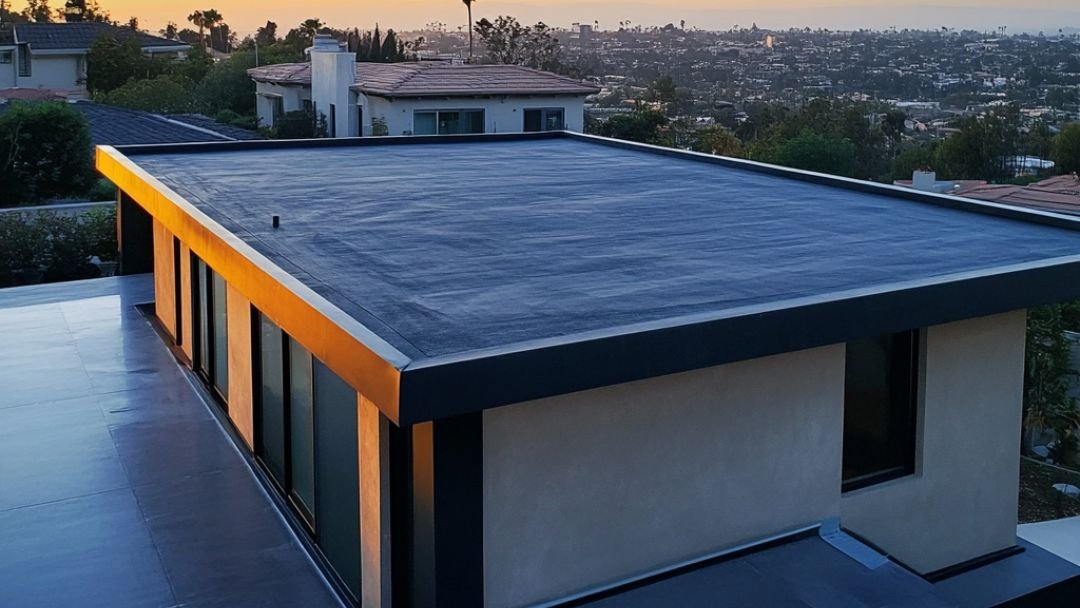
EPDM vs GRP vs felt at a glance
| Feature | EPDM (rubber) | GRP (fibreglass) | Torch-on felt |
|---|---|---|---|
| What it is | Single-ply synthetic rubber membrane | Glass reinforced polyester resin and matting | Layers of bitumen membrane bonded with heat |
| Finish | Plain black rubber | Smooth, hard, can be colour-coated | Mineral finish, usually grey or green |
| Flexibility | High, copes well with movement | Rigid | Moderate |
| Best for | Large, simple roofs | Small or complex roofs, balconies | Budget jobs and many standard roofs |
| Installation | Cold-applied, no naked flame | Laid in dry weather, needs to cure | Uses a torch, so needs trained installers |
| Repairs | Usually simple to patch | Possible, but needs good colour and resin matching | Usually simple to patch |
Manufacturers quote long service lives for both EPDM and GRP, often 20 years or more. In practice, however, lifespan depends on the product, the deck underneath and the skill of the installer.
What is an EPDM flat roof?
EPDM is a synthetic rubber membrane. On most homes, it goes on as a single sheet, so there are few or no joints for water to get through. It is also flexible, which means it copes well with heat and cold. As a result, it is a popular choice for garages, extensions and dormers with simple, rectangular shapes.
On the other hand, EPDM has a plain rubber finish. It also needs careful detailing around edges, outlets and upstands. A good installer makes a big difference here.
What is a GRP flat roof?
GRP stands for glass reinforced plastic, often called fibreglass. The roofer lays resin and glass matting over a timber deck, and then adds a topcoat. Once cured, it forms a hard, seamless surface that handles light foot traffic well. For this reason, GRP is common on balconies and roofs with lots of corners.
However, GRP must be laid in dry conditions. Because it is rigid, the deck must also be sound and properly prepared, or cracks can appear later.
What about felt roofing?
Older felt roofs gave felt a poor reputation, as many lasted only 10 to 20 years. Modern torch-on systems are much better, though. They use several layers of reinforced bitumen membrane, so they are tougher and longer lasting. Felt is often the most budget-friendly option, and it is easy to repair. Still, it needs a trained installer because of the open flame.
EPDM vs GRP: pros and cons
EPDM pros and cons
- Pro: flexible, so it handles temperature changes and small movements.
- Pro: fast, flame-free installation in a single sheet on most homes.
- Con: plain rubber look that some people do not like.
- Con: edges and details must be done carefully to avoid leaks.
GRP pros and cons
- Pro: seamless, hard surface that suits balconies and foot traffic.
- Pro: neat finish that can be colour-coated.
- Con: needs dry weather and time to cure.
- Con: rigid, so poor deck preparation can lead to cracking.
EPDM vs GRP: which is right for your roof?
Start with the roof itself. For example, a large, plain garage roof often suits EPDM. A small balcony or a roof with lots of corners may suit GRP better. Felt can be a good value choice for many standard roofs. Also think about looks, budget and whether you will walk on the roof.
Most importantly, ask your roofer about the deck, insulation and drainage, not just the top layer. Many flat roof failures come from rotten decking or water pooling, rather than from the membrane itself.
Do you need planning permission for a new flat roof?
Replacing a flat roof covering like for like usually does not need planning permission. However, changes to the height, shape or use of the roof might. Building Regulations can also apply, especially if a large part of the roof is replaced and insulation must be upgraded. The Planning Portal guidance on roofs is a good place to check before work starts.
EPDM vs GRP FAQs
Is GRP better than EPDM?
Not always. GRP is better for balconies, complex shapes and roofs with foot traffic. EPDM is often better for larger, simple roofs that move with the seasons. So the right choice depends on your roof, not on the material alone.
What are the disadvantages of an EPDM roof?
The main downsides are the plain rubber look and the need for careful detailing at edges and outlets. Also, sharp objects or heavy foot traffic can puncture it. Fortunately, small punctures are usually simple to patch.
What is the best material for a flat roof in the UK?
EPDM, GRP and modern torch-on felt can all perform well in UK weather. In fact, the installer’s skill, the condition of the deck and good drainage matter more than the brand name.
Can you put EPDM or GRP over an old felt roof?
Sometimes, but it is rarely the best idea. Overlaying can hide wet or rotten decking, which then fails later. So most roofers strip the old covering first and check the deck.
About this guide
This guide was written by the GNP Roofing team in Southall. We are working roofers, and we deal with flat roof repairs and replacements on homes across West London. So the advice here comes from what we see on real roofs, not from a sales script. It was last reviewed in October 2026.
Get help from GNP Roofing
Not sure whether EPDM, GRP or felt suits your roof? We can inspect it and explain the options in writing. GNP Roofing Building Ltd is based in Southall and covers 14 areas across West London. We have over 15 years of experience and carry full public liability insurance. In addition, every job comes with a 10-year written guarantee, and our own team does the work, so we never subcontract.
See our roofing services in West London, check the areas we cover, or contact us for a free written quote. You can also call 07424 323113.